So, a friend and I attended the Olympia Food Co-op's (OFC) annual meeting today. The meeting was generally quite well run.
However, at the outset, there was an earnest apology for selecting a venue that was not accessible for people who cannot climb a long flight of stairs. A site inspection should have been conducted before the meeting location was finalized. There was an effort to accommodate people who could not climb the stairs but that left them in another place linked by a video feed--a poor substitute for actually being at the meeting.
Another more minor shortcoming was in monitoring the length of board candidates' speeches. Each board candidate was allotted three minutes to address the membership. The thirty-second warning and time expiration notice were basically whispered to the candidates. Those need to be clearly audible/visible to everyone present.
I was close enough to the timekeeper that I could see and hear what was going on as Susan Godden Trinin demonstrated that she thought she was special and the rules that apply to everyone else didn't apply to her. Trinin, who spoke twice--on behalf of herself and fellow candidate Linda Sternhill Davis--defiantly went over-time both times.
Trinin wasn't alone, other members of Olympia's local Zionist whiner squad were also present today trying to perpetuate the dissension and division that, mainly, they have created over the boycott of Israeli goods. These people are playing, in no small part, to the timid, benighted souls who, as the Rev. Dr. Martin Luther King put it, prefer "a negative peace which is the absence of tension to a positive peace which is the presence of justice." Zionist kvetcher (but I repeat myself) extraordinaire Tibor Breuer tried but only briefly succeeded in hijacking the Q & A period.
However, it was clear from the financial overview and staff and committee reports that the co-op is moving forward. Membership and sales revenues were both up at both stores in the third fiscal quarter, most of which was after the passage of the boycott resolution. Kudos to OFC members, staff, and directors who have stood strong as Zionists far and wide have vilified them for taking a stand for justice and peace.
There were no stunning revelations when board candidates spoke. Vilification of the current board was the theme of the day in the remarks of pro-Israel candidates Kent Davis, Linda Sternhill Davis, Susan Godden Trinin, and to a lesser extent, Andrea Lipper. Lipper would actually be a worthy candidate if she had not aligned herself with apartheid Israel.
It was announced that another Zionist, Susan Schaeffer, had officially withdrawn from the election. There was no word on what part this blog's exposure of the "no-preconceived-notions, no-rigid-allegiances" candidate's dissimulation played in her decision to drop out.
Joshua Simpson, who informed me late last month that he was not an active candidate, was absent from the meeting and did not have a statement read there on his behalf. I saw him about an hour later at Coffee Strong.
T. J. Johnson's remarks only confirmed my earlier misgivings about him and his informal slate-mates Karen Bray and Kim Henderson. Like Lipper, Johnson has an impressive background but his unfounded criticism of the boycott process left my friend and I convinced that BDS Olympia had probably erred in endorsing Johnson. My first four votes went to Rochelle Gause, Erin Genia, John Regan, and incumbent Eric Mapes, who was, perhaps, the most articulate defender of the boycott of Israeli goods of all the candidates.
My final vote went to another incumbent, Suzanne Shafer, who also did not attend the meeting or have a statement read on her behalf. I understand that Shafer may now be an opponent of the boycott, and, if true, that's too bad, but she supported it or stood aside when it first came to the board for approval. For that and the other reasons discussed in the November print edition of Works in Progress (p. 13), Shafer got my vote.
In other circumstances, I might have voted for Teresa Young. Although I believe her to be sincere in her profession that she has "no position" on the boycott that wins her no points for integrity or moral courage. As a candidate for the OFC board, Young had the opportunity to make a public stand of conscience on one of the pressing global issues of our day. Today, in Rachel Corrie's hometown, she failed to answer the calls of justice and peace.
If you haven't voted yet, don't forget the election period ends November 15. If you have voted then feel free to forget it. ;-) Finally, thanks to the editors of Works in Progress for referring readers to this blog for information and updates on the election (November edition, p. 13).
See also:
Sunday, November 7, 2010


Saturday, October 30, 2010
Olympia Food Co-op Board Election Update
Update: Oly Food Co-op Annual Meeting Report
Three weeks ago, I provided some information on the candidates for the Olympic Food Co-op (OFC) Board of Directors election, which ends on November 15. Since then one candidate has apparently dropped out of the race, Wally Cuddeford's name does not appear on the updated ballot.
I'll probably wait until the annual meeting to complete my ballot but at this point I'm planning to vote for all of the candidates endorsed by Olympia BDS, with one exception. I may change my mind but currently I do not plan to vote for T. J. Johnson. In his candidate statement, he says:
I see no evidence (and Johnson offers none) that the co-op is not performing its "core mission". Also, support for the boycott of Israeli goods is consistent with the principles of the cooperative movement and the OFC's mission. Supporters of apartheid Israel are the people who threaten to derail things. The current board doesn't need to do any digging in my opinion. Let the boycott stand--it was passed in compliance with established procedures--move on and and ignore the racist whining of boycott opponents.
Three weeks ago, I provided some information on the candidates for the Olympic Food Co-op (OFC) Board of Directors election, which ends on November 15. Since then one candidate has apparently dropped out of the race, Wally Cuddeford's name does not appear on the updated ballot.
I'll probably wait until the annual meeting to complete my ballot but at this point I'm planning to vote for all of the candidates endorsed by Olympia BDS, with one exception. I may change my mind but currently I do not plan to vote for T. J. Johnson. In his candidate statement, he says:
... I’m concerned that after 30+years the Co-op has lost focus. I want to re-energize and refocus the Co-op on its core mission - serving its members/owners, making good food accessible to more people and being the cornerstone of a vibrant, sustainable and equitable local food system.In the co-op's online forum Johnson says:
While I conceptualluy [sic] supported [note the use of the past tense] the idea of an Israeli products boycott, I do not support the unilateral action taken by the board without member input. It was bad prcocess [sic]. The current board needs to dig out of the hole they created before the new board takes over in January. My agenda is way broader than the boycott. I want to redirect the organization's focus back to providing healthy local food accessible to all.Johnson also claims credit for recruiting Karen Bray and Kim Henderson as board candidates, neither of them was endorsed by Olympia BDS and if they support the boycott of Israeli goods then it appears that they've done a good job of concealing it. Johnson claims to have an agenda "broader than the boycott" and while I think that is as it should be--for every candidate--I question whether supporting the boycott is any part of Johnson's agenda. Furthermore, his complaints against the current board and his emphasis on how the co-op has lost "focus" don't ring true to me.
I see no evidence (and Johnson offers none) that the co-op is not performing its "core mission". Also, support for the boycott of Israeli goods is consistent with the principles of the cooperative movement and the OFC's mission. Supporters of apartheid Israel are the people who threaten to derail things. The current board doesn't need to do any digging in my opinion. Let the boycott stand--it was passed in compliance with established procedures--move on and and ignore the racist whining of boycott opponents.
Tuesday, October 26, 2010
Powerful PACBI Protest of Jerusalem Quartet at Univ of Mich in Ann Arbor
Audience members couldn't get into the performance without seeing people protesting apartheid Israel ...
The song is "Long Live Palestine" by the Iraqi-British musician, Lowkey.
The song is "Long Live Palestine" by the Iraqi-British musician, Lowkey.
Saturday, October 9, 2010
BDS & The Olympia Food Co-op Board Election
Update: Olympia Food Co-op Board Election Update
This post was temporarily taken down at the request of Olympia BDS while they prepared their candidate endorsements. You won't find any endorsements below but boycott supporters are well-advised to consider voting for the candidates endorsed by Olympia BDS. Because there are five openings and five obvious boycott opponents, vote-splitting among the eleven other candidates by boycott supporters could possibly lead to the election of one or more boycott opponents to the board.
Last July, after a two-year process and in an admirable act of conscience, the Board of Directors of the Olympia Food Co-op (OFC) voted unanimously to honor the Palestinian call for "broad boycotts ... against Israel similar to those applied to South Africa in the apartheid era." In less than one week voting for Board members begins. The election takes place from October 15th until November 15th. Below you will find information about the candidates from an internet search and from the current OFC newsletter where you can find the complete candidate statements (which you should read before you vote) plus a ballot and voting instructions.
There is a field of sixteen candidates this year; members can vote for five. Two of the candidates are incumbents running for re-election, which means theyvoted in favor of supported or did not block consensus in support of the boycott of Israeli goods. They are: Eric Mapes and Suzanne Shafer (not to be confused with non-incumbent candidate Susan Schaeffer).
Notwithstanding the controversy over the boycott of Israeli goods, Karen Bray says in her statement: "The Co-op has done well in staying true to its mission statement." Boycott supporter? I'm not sure.
Candidate Wally Cuddeford says: "With the recent boycott drama, I am deeply concerned about pronouncements by people in the community that they intend to run for the board strictly with the goal of overturning the boycott. It is my firm belief that, whether you agree with the boycott or not, such a single-minded aim is reckless, irresponsible, and ultimately dangerous." Dangerous? That seems hyperbolic. In any case, Cuddeford is an active, open boycott supporter. You can read his comments at the August member's forum online here.
Kent Davis is "disturbed by the recent Board actions that have created a caustic environment in Olympia." He says: "The Food Co-op should concentrate on providing good food to the community and not get involved in political debate." According to his Facebook page, Davis also likes "Boycott Olympia Food Co-op". I'd say that makes him an boycott opponent. He is also Facebook friends with Linda Sternhill Davis (see below).
Accentuating the positive, Linda Sternhill Davis avoids staking out an open position on the boycott of Israeli goods. Regarding what she would like to see changed at the co-op, she merely says, "Addressing and healing the divisiveness that is currently affecting our Co-op and community." Judging by her Facebook page, though, she's probably a boycott opponent. She is Facebook friends with Akiva Tor, the Consul General of Israel for the Pacific Northwest, and Gary Acheatel, one of the founders of Advocates for Israel. Like Kent Davis, Sternhill Davis is a fan of Boycott Olympia Food Co-op.
Rochelle Gause is on the board of the Olympia Rafah Sister City Project. Here is how she closed her comments at the August member's forum: "In memory of the thousands of Palestinians who have lost their lives at the hands of our F-16s, Apaches, bulldozers and bullets, and in memory of our own Rachel Corrie who died to bring light to this situation, please honor the boycott. Thanks!" She is a boycott supporter.
Erin Genia was a 2008-09 Jessie Lloyd O'Connor Scholar, her bio says: "An exploration of the commonalities between Native American and Palestinian struggles led her to the Rachel Corrie Foundation 'Breaking the Silence' mural project and the Olympia-Rafah Mural project." Erin Genia is also listed as a member of the "alliance of Artists Against Apartheid", which supports the boycott of Israel. Methinks she is a boycott supporter.
Candidate Kim Henderson has been a "Co-op shopper and a volunteer stocker" for twenty years. Where she stands on the boycott is a mystery to me.
TJ Johnson is "concerned that after 30+ years the Co-op has lost focus." He wants "to re-energize and refocus the Co-op on its core mission - serving its members/owners, making good food accessible to more people and being the cornerstone of a vibrant, sustainable and equitable local food system." Notwithstanding these comments, Johnson is listed by Olympia BDS as a boycott supporter and Johnson was one of only two city council members who supported the failed proposal to form a sister city relationship between Olympia and the Palestinian city of Rafah
In her candidate statement, Andrea Lipper says, in part: "I am interested in being on the Board of Directors of our Co-op for 3 main reasons: 1) I want to help steer the Co-op's future growth in membership, revenues, and locations. 2) I want to work on strengthening the Co-ops internal policies including boycott policies." That's somewhat ambiguous. However, Andrea Lipper is quoted in a March 22, 2007 letter (accessible via infoweb.newsbank.com; login required) to The Olympian as opposing the Olympia-Rafah sister city proposal because "Rafah is the home of HAMAS ..." and "Ninety percent of Rafah's population voted for HAMAS ..." She suggested forming a relationship with an Israeli city instead. I'm thinking she's a boycott opponent.
John Regan says: "As a member of the BOD my decisions would be grounded in the Co-op's history, mission, commitment to social justice through economic development (including its decision to boycott Israeli products), as well as the challenges and opportunities presented by the marketplace." He appears to be a boycott supporter.
Susan Schaeffer graciously tells us that she's "an excellent administrator" and "a fairly new Co-op member" who "would like to be part of the Co-op moving beyond recent events." She claims to "bring no preconceived notions, and ... no rigid allegiances." Part of her "vision for the Co-op" is to "Find a way to repair the sense of community destroyed by the boycott." She wants to lead "in shifting the Co-op's mission from one of political theatrics to one of serving its members – all of its members . . . well." Curiously, in an August 13th letter to the Tacoma News-Tribune, the no-preconceived-notions, no-rigid-allegiances candidate Schaeffer writes, "I support my Jewish friends in their view of the Olympia Food Co-op boycott. If the board does not change its position, I will resign my membership." Yet, here she is two months later running for the Board of Directors. Go figure. I reckon she's a boycott opponent.
Joshua Simpson says, in part, in his candidate statement: "I would also like to see the Co-op always continuing to provide more and more local and cruelty free products to the Olympia community, while continuing to boycott products that are not conducive to developing a more 'socially and economically egalitarian society'." He continues: "The Co-op's main strength right now is it's adherence to its mission statement and goals, even when it ... faces strident opposition and threats." Simpson was listed by Olympia BDS as a boycott supporter.
Susan Godden Trinin is an active, open boycott opponent with two pieces in the September edition of Works in Progress: "The story behind It's Our Co-op's petition" and "Statement from anti-boycott Co-op member". In her candidate statement, former Board member Godden Trinin says:
Claims Teresa Young: "When I visit the Co-op on my shopping day, I always run into people I know and care about. ... The Co-op is more than just a store, it's our store. No matter what changes the Co-op may go through, I see the Co-op sticking to its roots and being guided by its mission and sense of social justice." Young, apparently, still shops at the co-op. That's a plus but her assertion "it's our store" echoes the rallying whine of the boycott opponents: "It's our co-op". I can't tell where Young stands on the issue. Can you?
This post was temporarily taken down at the request of Olympia BDS while they prepared their candidate endorsements. You won't find any endorsements below but boycott supporters are well-advised to consider voting for the candidates endorsed by Olympia BDS. Because there are five openings and five obvious boycott opponents, vote-splitting among the eleven other candidates by boycott supporters could possibly lead to the election of one or more boycott opponents to the board.
Last July, after a two-year process and in an admirable act of conscience, the Board of Directors of the Olympia Food Co-op (OFC) voted unanimously to honor the Palestinian call for "broad boycotts ... against Israel similar to those applied to South Africa in the apartheid era." In less than one week voting for Board members begins. The election takes place from October 15th until November 15th. Below you will find information about the candidates from an internet search and from the current OFC newsletter where you can find the complete candidate statements (which you should read before you vote) plus a ballot and voting instructions.
There is a field of sixteen candidates this year; members can vote for five. Two of the candidates are incumbents running for re-election, which means they
Notwithstanding the controversy over the boycott of Israeli goods, Karen Bray says in her statement: "The Co-op has done well in staying true to its mission statement." Boycott supporter? I'm not sure.
Candidate Wally Cuddeford says: "With the recent boycott drama, I am deeply concerned about pronouncements by people in the community that they intend to run for the board strictly with the goal of overturning the boycott. It is my firm belief that, whether you agree with the boycott or not, such a single-minded aim is reckless, irresponsible, and ultimately dangerous." Dangerous? That seems hyperbolic. In any case, Cuddeford is an active, open boycott supporter. You can read his comments at the August member's forum online here.
Kent Davis is "disturbed by the recent Board actions that have created a caustic environment in Olympia." He says: "The Food Co-op should concentrate on providing good food to the community and not get involved in political debate." According to his Facebook page, Davis also likes "Boycott Olympia Food Co-op". I'd say that makes him an boycott opponent. He is also Facebook friends with Linda Sternhill Davis (see below).
Accentuating the positive, Linda Sternhill Davis avoids staking out an open position on the boycott of Israeli goods. Regarding what she would like to see changed at the co-op, she merely says, "Addressing and healing the divisiveness that is currently affecting our Co-op and community." Judging by her Facebook page, though, she's probably a boycott opponent. She is Facebook friends with Akiva Tor, the Consul General of Israel for the Pacific Northwest, and Gary Acheatel, one of the founders of Advocates for Israel. Like Kent Davis, Sternhill Davis is a fan of Boycott Olympia Food Co-op.
Rochelle Gause is on the board of the Olympia Rafah Sister City Project. Here is how she closed her comments at the August member's forum: "In memory of the thousands of Palestinians who have lost their lives at the hands of our F-16s, Apaches, bulldozers and bullets, and in memory of our own Rachel Corrie who died to bring light to this situation, please honor the boycott. Thanks!" She is a boycott supporter.
Erin Genia was a 2008-09 Jessie Lloyd O'Connor Scholar, her bio says: "An exploration of the commonalities between Native American and Palestinian struggles led her to the Rachel Corrie Foundation 'Breaking the Silence' mural project and the Olympia-Rafah Mural project." Erin Genia is also listed as a member of the "alliance of Artists Against Apartheid", which supports the boycott of Israel. Methinks she is a boycott supporter.
Candidate Kim Henderson has been a "Co-op shopper and a volunteer stocker" for twenty years. Where she stands on the boycott is a mystery to me.
TJ Johnson is "concerned that after 30+ years the Co-op has lost focus." He wants "to re-energize and refocus the Co-op on its core mission - serving its members/owners, making good food accessible to more people and being the cornerstone of a vibrant, sustainable and equitable local food system." Notwithstanding these comments, Johnson is listed by Olympia BDS as a boycott supporter and Johnson was one of only two city council members who supported the failed proposal to form a sister city relationship between Olympia and the Palestinian city of Rafah
In her candidate statement, Andrea Lipper says, in part: "I am interested in being on the Board of Directors of our Co-op for 3 main reasons: 1) I want to help steer the Co-op's future growth in membership, revenues, and locations. 2) I want to work on strengthening the Co-ops internal policies including boycott policies." That's somewhat ambiguous. However, Andrea Lipper is quoted in a March 22, 2007 letter (accessible via infoweb.newsbank.com; login required) to The Olympian as opposing the Olympia-Rafah sister city proposal because "Rafah is the home of HAMAS ..." and "Ninety percent of Rafah's population voted for HAMAS ..." She suggested forming a relationship with an Israeli city instead. I'm thinking she's a boycott opponent.
John Regan says: "As a member of the BOD my decisions would be grounded in the Co-op's history, mission, commitment to social justice through economic development (including its decision to boycott Israeli products), as well as the challenges and opportunities presented by the marketplace." He appears to be a boycott supporter.
Susan Schaeffer graciously tells us that she's "an excellent administrator" and "a fairly new Co-op member" who "would like to be part of the Co-op moving beyond recent events." She claims to "bring no preconceived notions, and ... no rigid allegiances." Part of her "vision for the Co-op" is to "Find a way to repair the sense of community destroyed by the boycott." She wants to lead "in shifting the Co-op's mission from one of political theatrics to one of serving its members – all of its members . . . well." Curiously, in an August 13th letter to the Tacoma News-Tribune, the no-preconceived-notions, no-rigid-allegiances candidate Schaeffer writes, "I support my Jewish friends in their view of the Olympia Food Co-op boycott. If the board does not change its position, I will resign my membership." Yet, here she is two months later running for the Board of Directors. Go figure. I reckon she's a boycott opponent.
Joshua Simpson says, in part, in his candidate statement: "I would also like to see the Co-op always continuing to provide more and more local and cruelty free products to the Olympia community, while continuing to boycott products that are not conducive to developing a more 'socially and economically egalitarian society'." He continues: "The Co-op's main strength right now is it's adherence to its mission statement and goals, even when it ... faces strident opposition and threats." Simpson was listed by Olympia BDS as a boycott supporter.
Susan Godden Trinin is an active, open boycott opponent with two pieces in the September edition of Works in Progress: "The story behind It's Our Co-op's petition" and "Statement from anti-boycott Co-op member". In her candidate statement, former Board member Godden Trinin says:
We face some real, intense challenges in the wake of the recent boycott. I firmly believe the Boycott Policy must be reviewed, revised, retooled in the interests of opening up the process to more discussion, more opinions, more enfranchisement--consensus-based decision making. I believe a fresh voice, with experience and dedication, could be an asset in facing the challenges of this issue, and our expansion program as well.Godden Trinin adds elsewhere: "I am a 30-year member of the Jewish community since my marriage and raising two Jewish daughters. I also feel that this experience helps my understanding of the complex and polarizing issues before us at this time."
Claims Teresa Young: "When I visit the Co-op on my shopping day, I always run into people I know and care about. ... The Co-op is more than just a store, it's our store. No matter what changes the Co-op may go through, I see the Co-op sticking to its roots and being guided by its mission and sense of social justice." Young, apparently, still shops at the co-op. That's a plus but her assertion "it's our store" echoes the rallying whine of the boycott opponents: "It's our co-op". I can't tell where Young stands on the issue. Can you?
Sunday, September 12, 2010
Vets for Peace to Remember Folke Bernadotte in Seattle's Historic Scandinavian Neighborhood
This Friday, members of the Greater Seattle chapter of Veterans For Peace (VFP) will go to Ballard, Seattle's historically Scandinavian neighborhood, to help raise awareness of the life and legacy of Folke Bernadotte, Swedish diplomat and UN Mediator. There are more than seven million Palestinian refugees worldwide. Jewish terrorists assassinated Bernadotte on September 17, 1948, because, at the very beginning of their exile, he advocated that the Palestinian refugees be allowed to be return home. Ironically, the Israeli holocaust museum, Yad Vashem, credits Bernadotte with helping to save no fewer than 2,400 European Jews during WWII. Yet, unlike Raoul Wallenberg, Bernadotte is not recognized as one of the "Righteous Among the Nations" and is largely forgotten. VFP members will be at Bergen Place Park to hand out leaflets about Bernadotte from 11:30 AM until 1:30 PM or all the leaflets have been distributed, whichever comes first.
Wednesday, June 23, 2010
"Conquer All the Violence": Three Questions for Norman Finkelstein
This article first appeared on Palestine Think Tank along with an excellent piece by Saja last fall. The formatting there makes the article difficult to read.
"Conquer All the Violence": Three Questions for Norman Finkelstein
by Michelle J. Kinnucan
Well, Norman G. Finkelstein has thrown down the gauntlet for a "public brawl" by his decision to make public his resignation from the Gaza Freedom March coalition. Finkelstein says, vaguely, he resigned because: "During the week beginning August 30, 2009 and in a matter of days an entirely new sectarian agenda dubbed 'the political context' was foisted on those who originally signed on and worked tirelessly for three months." Apparently, two Palestinian activists, Omar Barghouti and Haidar Eid, living in the West Bank and Gaza, respectively, had the incredible gall to insist that the US-based, Code Pink-backed International Coalition to End the Illegal Siege of Gaza should deviate from the standard Left Zionist American line by clearly acknowledging "that Palestinians have for over six decades been denied their basic rights that they are entitled to under international law, including the right of return, and the fact that Palestinian civil society has adopted Boycott, Divestment and Sanctions (BDS) as one of its main civil resistance strategies against Israel’s occupation and other injustices."
The coalition's newly adopted "Statement of Context" does indeed mention the Right of Return and BDS. This crossed one or more of Finkelstein's red lines. Now, I've read at least three books by Norman Finkelstein and I've heard him speak on two occasions. Additionally, I've watched debates and interviews with him and read some of his shorter online writings. Finkelstein has shown real courage and made important scholarly contributions to understanding Zionism and the Jewish state. It is unfortunate then that even as he has repeatedly been a victim of Zionists, Finkelstein is himself functionally a Zionist of the Left-liberal persuasion.
He does untold harm to the Palestinian people and the justice and peace movement by peddling his 'softer' but disguised Zionism to his adoring fans in the cloak of "the international consensus," etc. This makes him much more dangerous to the Palestinian solidarity movement than people like Netanyahu or Dershowitz because so many folks are unable or disinclined to see past the impressive surface to the heart of Finkelstein's pro-Zionist discourse. As Malcolm X once said, "I'd rather walk among rattlesnakes, whose constant rattle warns me where they are, than among those ... snakes who grin and make you forget you're still in a snake pit."
Not so long ago, but before Finkelstein's recent resignation, I had the occasion to view Finkelstein's November 13, 2008, speech on "Resolving the Israel-Palestine Conflict: What we can learn from Gandhi." This speech is still featured prominently on the front page of Finkelstein's personal web site. You can watch a video of the speech here or read the text here. Drawing upon that speech and other works of Finkelstein with which I am familiar, I address three questions/comments to Dr. Finkelstein. In the light of his public resignation from the Gaza Freedom March coalition, I think now is a good time to reevaluate his role in the larger movement and the shaping of its discourse. (Except where otherwise noted all Finkelstein quotes below are from "Resolving the Israel-Palestine Conflict: What we can learn from Gandhi").
First, you say:
Second, you characterize "the occasional calls for eliminating the 'Zionist entity' and embracing a 'one-state' solution" as "not command[ing] international legitimacy" and "enjoy[ing] exactly zero international support." You ask: "Where is the legal or moral precedent for dismantling the 'Zionist entity' ... or a 'one-state' solution ... ?"
Why do you not acknowledge that at any time in the last forty-one years the Israeli government had the power to let Palestinians try to form a Palestinian state? The Israelis chose instead to colonize the occupied territories. Why do you not acknowledge that the "two-state solution," aside from being arguably unworkable now, is the very epitome of apartheid and that the global South African anti-apartheid campaign provides us with the applicable legal and moral precedent? Why don't you just avoid the "sterile debate" of one vs. two-state by embracing the goals of the Palestinian BDS campaign? They are:
Your invocation of Aimé Césaire and Edward Said is curious to say the least. Here is Césaire's poem in its entirety:
It is inconceivable that Said would agree with your exhortation to neglect or downplay the ideological component of the Palestinian struggle for justice and liberty. In his 1979 "Zionism from the Standpoint of Its Victims," Said writes:
"Conquer All the Violence": Three Questions for Norman Finkelstein
by Michelle J. Kinnucan
Well, Norman G. Finkelstein has thrown down the gauntlet for a "public brawl" by his decision to make public his resignation from the Gaza Freedom March coalition. Finkelstein says, vaguely, he resigned because: "During the week beginning August 30, 2009 and in a matter of days an entirely new sectarian agenda dubbed 'the political context' was foisted on those who originally signed on and worked tirelessly for three months." Apparently, two Palestinian activists, Omar Barghouti and Haidar Eid, living in the West Bank and Gaza, respectively, had the incredible gall to insist that the US-based, Code Pink-backed International Coalition to End the Illegal Siege of Gaza should deviate from the standard Left Zionist American line by clearly acknowledging "that Palestinians have for over six decades been denied their basic rights that they are entitled to under international law, including the right of return, and the fact that Palestinian civil society has adopted Boycott, Divestment and Sanctions (BDS) as one of its main civil resistance strategies against Israel’s occupation and other injustices."
The coalition's newly adopted "Statement of Context" does indeed mention the Right of Return and BDS. This crossed one or more of Finkelstein's red lines. Now, I've read at least three books by Norman Finkelstein and I've heard him speak on two occasions. Additionally, I've watched debates and interviews with him and read some of his shorter online writings. Finkelstein has shown real courage and made important scholarly contributions to understanding Zionism and the Jewish state. It is unfortunate then that even as he has repeatedly been a victim of Zionists, Finkelstein is himself functionally a Zionist of the Left-liberal persuasion.
He does untold harm to the Palestinian people and the justice and peace movement by peddling his 'softer' but disguised Zionism to his adoring fans in the cloak of "the international consensus," etc. This makes him much more dangerous to the Palestinian solidarity movement than people like Netanyahu or Dershowitz because so many folks are unable or disinclined to see past the impressive surface to the heart of Finkelstein's pro-Zionist discourse. As Malcolm X once said, "I'd rather walk among rattlesnakes, whose constant rattle warns me where they are, than among those ... snakes who grin and make you forget you're still in a snake pit."
Not so long ago, but before Finkelstein's recent resignation, I had the occasion to view Finkelstein's November 13, 2008, speech on "Resolving the Israel-Palestine Conflict: What we can learn from Gandhi." This speech is still featured prominently on the front page of Finkelstein's personal web site. You can watch a video of the speech here or read the text here. Drawing upon that speech and other works of Finkelstein with which I am familiar, I address three questions/comments to Dr. Finkelstein. In the light of his public resignation from the Gaza Freedom March coalition, I think now is a good time to reevaluate his role in the larger movement and the shaping of its discourse. (Except where otherwise noted all Finkelstein quotes below are from "Resolving the Israel-Palestine Conflict: What we can learn from Gandhi").
First, you say:
If I propose that Palestinians adopt Gandhi's doctrine of nonviolent civil resistance, it is ... because of a compelling pragmatic insight of his. There is nothing violence can accomplish, Gandhi maintained, that nonviolence cannot accomplish—and with lesser loss of life. ... Palestinians have little to show for the violent resistance; indeed, nearly all the reckonings after eight years of bloodletting fall squarely in the debit column. It is at least arguable that the balance-sheet would have been better had Palestinians en masse adopted nonviolent civil resistance.If you truly believe this then why is it that with scant exceptions you have never made it a point to speak directly or forcefully in favor of the ongoing, nonviolent Palestinian boycott campaigns against Israel? Specifically, I am referring to the 2005 call by 171 Palestinian political parties, unions, NGOs and networks for for broad boycott, divestment and sanctions (BDS) against Israel and the 2004 Palestinian Campaign for the Academic and Cultural Boycott of Israel.
Second, you characterize "the occasional calls for eliminating the 'Zionist entity' and embracing a 'one-state' solution" as "not command[ing] international legitimacy" and "enjoy[ing] exactly zero international support." You ask: "Where is the legal or moral precedent for dismantling the 'Zionist entity' ... or a 'one-state' solution ... ?"
Why do you not acknowledge that at any time in the last forty-one years the Israeli government had the power to let Palestinians try to form a Palestinian state? The Israelis chose instead to colonize the occupied territories. Why do you not acknowledge that the "two-state solution," aside from being arguably unworkable now, is the very epitome of apartheid and that the global South African anti-apartheid campaign provides us with the applicable legal and moral precedent? Why don't you just avoid the "sterile debate" of one vs. two-state by embracing the goals of the Palestinian BDS campaign? They are:
1. Ending Israel's occupation and colonization of all Arab lands and dismantling the Wall;Third, you state:
2. Recognizing the fundamental rights of the Arab-Palestinian citizens of Israel to full equality; and
3. Respecting, protecting and promoting the rights of Palestinian refugees to return to their homes and properties as stipulated in UN resolution 194.
The Caribbean poet Aimé Césaire once wrote, "There's room for everyone at the rendezvous of victory." Late in life, when his political horizons broadened out, Edward Said would often quote this line. We should make it our credo as well. We want to nurture a movement, not hatch a cult. The victory to which we aspire is inclusive, not exclusive; it is not at anyone's expense. It is to be victorious without vanquishing. No one is a loser, and we all are gainers if together we stand by truth and justice. "I am not anti-English; I am not anti-British; I am not anti-any government," Gandhi insisted, "but I am anti-untruth—anti-humbug, and anti-injustice."(188) Shouldn't we also say that we are not anti-Jewish, anti-Israel or, for that matter, anti-Zionist? The prize on which our eyes should be riveted is human rights, human dignity, human equality. What, really, is the point of ideological litmus tests such as, Are you now or have you ever been a Zionist?At not inconsiderable cost to yourself, you have undertaken to expose the "Holocaust Industry" as an ideological construct used to, among other things, mask human rights violation by Israel. Isn't it ironic that having taken on this loaded subject you are now counseling others to disregard Zionism, another ideological construct?
Your invocation of Aimé Césaire and Edward Said is curious to say the least. Here is Césaire's poem in its entirety:
For it is not true that the work of man is finishedYes, there is "a place for all at the rendezvous of victory" but your words do a disservice to Césaire, Said, and Gandhi when you suggest that the violent ideology of Zionism should remain untouched and unchallenged and when you casually, but misleadingly, equate British colonial rule of India with the creation of the Jewish state--Israel--in Palestine. In the context of Palestine, ending or radically transforming Zionism is assuredly a key part of "conquer[ing] all the violence," as Césaire put it.
That man has nothing more to do in the world
But be a parasite in the world
That all we now need is to keep in step with the world.
But the work of man is only just beginning
And it remains to man to conquer all the violence embedded
in the recesses of his passion
And no race possesses the monopoly of beauty, of intelligence, of freedom
There is a place for all at the rendezvous of victory.
It is inconceivable that Said would agree with your exhortation to neglect or downplay the ideological component of the Palestinian struggle for justice and liberty. In his 1979 "Zionism from the Standpoint of Its Victims," Said writes:
... effective political ideas like Zionism need to be examined historically in two ways: (1) genealogically in order that their provenance, their kinship and descent, their affiliation both with other ideas and with political institutions may be demonstrated; (2) as practical systems for accumulation (of power, land, ideological legitimacy) and displacement (of people, other ideas, prior legitimacy). Present political and cultural actualities make such an examination extraordinarily difficult, as much because Zionism in the postindustrial West has acquired for itself an almost unchallenged hegemony in liberal "establishment" discourse, as because in keeping with one of its central ideological characteristics, Zionism has hidden, or caused to disappear, the literal historical ground of its growth, its political cost to the native inhabitants of Palestine, and its militantly oppressive discriminations between Jews and non-Jews. ...More recently in a 2003 interview with David Barsamian, transcribed in a chapter of Culture and Resistance entitled "At the Rendezvous of Victory," Said said:
The fact also that no Palestinian, regardless of his political stripe, has been able to reconcile himself to Zionism suggests the extent to which, for the Palestinian, Zionism has appeared to be an uncompromisingly exclusionary, discriminatory, colonialist praxis . So powerful, and so unhesitatingly followed, has been the radical Zionist distinction between privileged Jews in Palestine and unprivileged non-Jews there, that nothing else has emerged, no perception of suffering human existence has escaped from the two camps created thereby. As a result, it has been impossible for Jews to understand the human tragedy caused the Arab Palestinians by Zionism; and it has been impossible for Arab Palestinians to see in Zionism anything except an ideology and a practice keeping them, and Israeli Jews, imprisoned. But in order to break down the iron circle of inhumanity, we must see how it was forged, and there it is ideas and culture themselves that play the major role. ...
It is one of the most frightening cultural episodes of the century, this almost total silence about Zionism's doctrines for and treatment of the native Palestinians
Unfortunately, there's a significant number of Arab intellectuals who ... say "Let's stop talking about the evils of imperialism and Zionism. Let's start talking about our self-inflicted wounds." People like Fouad Ajami and Kanan Makiya . It's a profound self-abjection, which I deeply resent. It suits perfectly the neoconservative idea that people are responsible for their own disasters. As if imperialism never happened, as if genocide never happened, as if ethnic cleansing never happened. I just think it's outrageous.During Israel's Hanukkah Massacre in Gaza last winter, Ilan Pappe highlighted the importance of confronting Zionism. He writes in "Israel's righteous fury and its victims in Gaza":
There are no boundaries to the hypocrisy that a righteous fury produces. ...So, why is it that you, Dr. Finkelstein, have determined that Zionism is off-limits?
This righteous fury is a constant phenomenon in the Israeli, and before that Zionist, dispossession of Palestine. Every act whether it was ethnic cleansing, occupation, massacre or destruction was always portrayed as morally just and as a pure act of self-defense reluctantly perpetrated by Israel in its war against the worst kind of human beings. ... Today in Israel, from Left to Right, from Likud to Kadima , from the academia to the media, one can hear this righteous fury of a state that is more busy than any other state in the world in destroying and dispossessing an indigenous population.
It is crucial to explore the ideological origins of this attitude and derive the necessary political conclusions from its prevalence. This righteous fury shields the society and politicians in Israel from any external rebuke or criticism. But far worse, it is translated always into destructive policies against the Palestinians. With no internal mechanism of criticism and no external pressure, every Palestinian becomes a potential target of this fury. Given the firepower of the Jewish state it can inevitably only end in more massive killings, massacres and ethnic cleansing.
The self-righteousness is a powerful act of self-denial and justification. It explains why the Israeli Jewish society would not be moved by words of wisdom, logical persuasion or diplomatic dialogue. And if one does not want to endorse violence as the means of opposing it, there is only one way forward: challenging head-on this righteousness as an evil ideology meant to cover human atrocities. Another name for this ideology is Zionism and an international rebuke for Zionism, not just for particular Israeli policies, is the only way of countering this self-righteousness. We have to try and explain not only to the world, but also to the Israelis themselves, that Zionism is an ideology that endorses ethnic cleansing, occupation and now massive massacres. What is needed now is not just a condemnation of the present massacre but also delegitimization of the ideology that produced that policy and justifies it morally and politically. Let us hope that significant voices in the world will tell the Jewish state that this ideology and the overall conduct of the state are intolerable and unacceptable and as long as they persist, Israel will be boycotted and subject to sanctions. [emphasis added]
Thursday, May 6, 2010
Protesting Tzuza--Recent BDS Action in Seattle
On Sunday, May 2, 2010, eight people of conscience took a nonviolent stand for justice and peace in front of the Stroum Jewish Community Center on Mercer Island, near Seattle, Washington. The Boycott, Divestment, and Sanctions (BDS) action was hastily organized during a regional BDS workshop at St. Mark's Episcopal Cathedral to protest the performance of the Tzuza Dancers, an Israeli troupe hailing from Kiryat Malachi, Israel, a town built on the remnants of Qastina. On July 9, 1948, Qastina was violently ethnically cleansed of its Palestinian inhabitants by Jewish troops of the Giv'ati Brigade.
The protesters included members of St. Mark's Episcopal Cathedral, Voices of Palestine, and Greater Seattle Veterans for Peace. While there were a few middle-finger salutes, the action was generally well-received by members of the Mercer Island community with decidedly more passersby by honking, waving, smiling, and gesturing in support. Such a good and productive time was had that the protest was extended fifteen minutes longer than scheduled. The shows of support coming even from people entering the SJCC more than made up for the one angry, young man who repeatedly screamed at us from a distance, "No one cares about your message." He seemed to care a lot.
The protesters included members of St. Mark's Episcopal Cathedral, Voices of Palestine, and Greater Seattle Veterans for Peace. While there were a few middle-finger salutes, the action was generally well-received by members of the Mercer Island community with decidedly more passersby by honking, waving, smiling, and gesturing in support. Such a good and productive time was had that the protest was extended fifteen minutes longer than scheduled. The shows of support coming even from people entering the SJCC more than made up for the one angry, young man who repeatedly screamed at us from a distance, "No one cares about your message." He seemed to care a lot.
Tuesday, March 30, 2010
Folke Bernadotte: The 'Unrighteous' Dead
Dan McGowan has recently had an interesting article published on Veterans Today concerning "Righteous Gentiles" and "Righteous Jews." In it he talks about, among other things, people who didn't make Yad Vashem's list of "Righteous Gentiles" and why, describing the cases of Muhammed V of Morocco, Khalil al-Sakakini, Dietrich Bonhoeffer, and Hans von Dohnanyi.
One guy Dan didn't write about but who you might think would be a shoe-in for a list of non-Jews who helped save Jews during WWII is Folke Bernadotte. He is credited by Yad Vashem with helping to save no fewer than 2,400 Jews during WWII. The real number may be closer to 11,000.
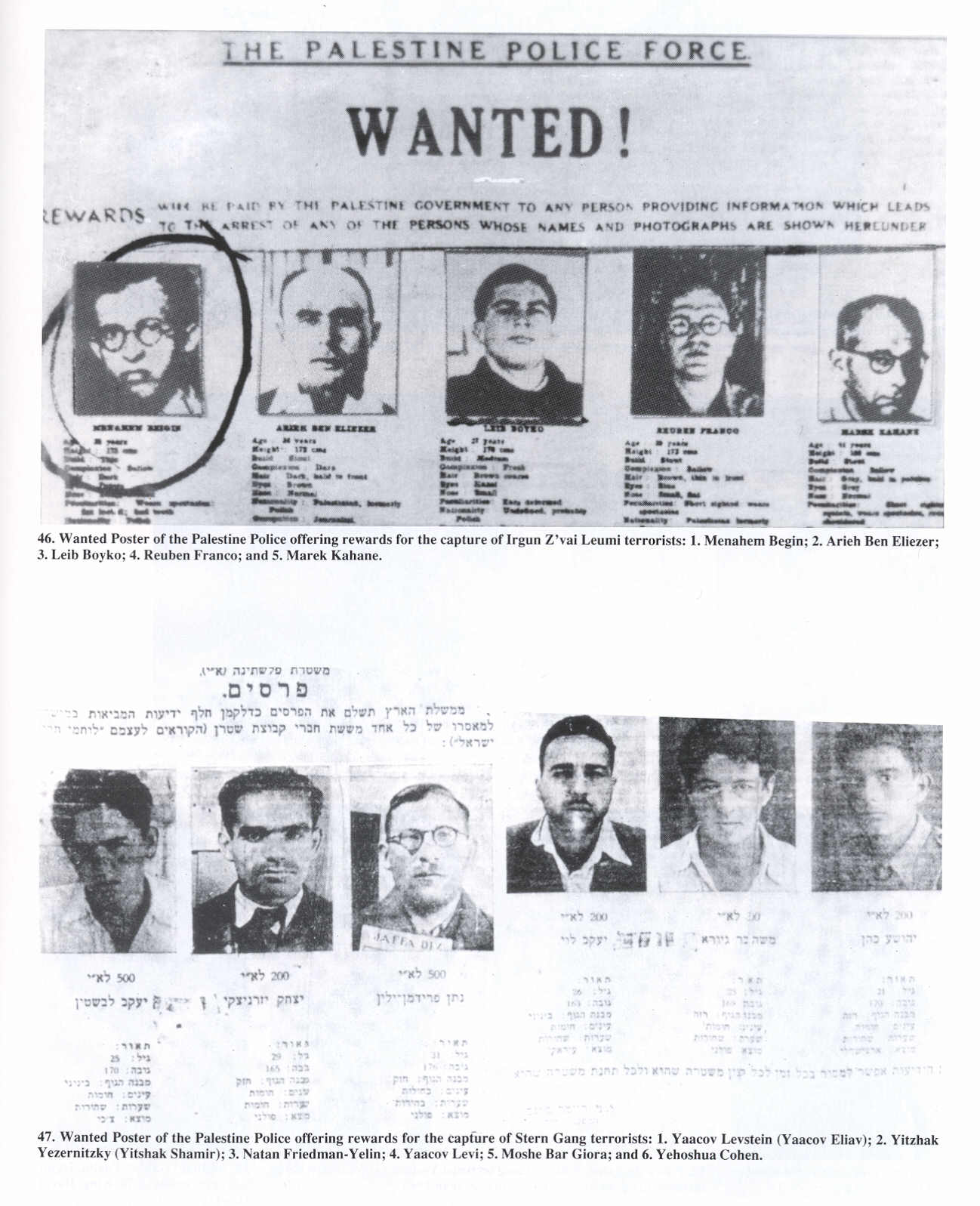
But Bernadotte will probably never be recognized as a "Righteous Gentile" for the simple reason that while serving as a United Nations mediator he was assassinated during a ceasefire in Palestine in 1948 by Jewish terrorists of the LEHI a.k.a. the Stern Gang, who also participated in the Deir Yassin massacre. One of the terrorist leaders who authorized his assassination was future Israeli prime minister, Yitzhak Shamir. Shamir once wrote:
One guy Dan didn't write about but who you might think would be a shoe-in for a list of non-Jews who helped save Jews during WWII is Folke Bernadotte. He is credited by Yad Vashem with helping to save no fewer than 2,400 Jews during WWII. The real number may be closer to 11,000.
But Bernadotte will probably never be recognized as a "Righteous Gentile" for the simple reason that while serving as a United Nations mediator he was assassinated during a ceasefire in Palestine in 1948 by Jewish terrorists of the LEHI a.k.a. the Stern Gang, who also participated in the Deir Yassin massacre. One of the terrorist leaders who authorized his assassination was future Israeli prime minister, Yitzhak Shamir. Shamir once wrote:
Neither Jewish ethics nor Jewish tradition can disqualify terrorism as a means of combat. We are very far from having any moral qualms as far as our national war goes. We have before us the command of the Torah, whose morality surpasses that of any other body of laws in the world: "Ye shall blot them out to the last man." We are particularly far from having any qualms with regard to the enemy, whose moral degradation is universally admitted here.Another of Bernadotte's assassins, Natan Yellin-Mor, was elected to the Israeli Knesset shortly after the killing. No one was ever arrested for Bernadotte's assassination and the Israeli military honors LEHI veterans with a service ribbon. The quote below from Bernadotte helps illuminate the motives of the Jewish terrorists in killing Bernadotte. It is from a report submitted the day before his assassination.
It is ... undeniable that no settlement can be just and complete if recognition is not accorded to the right of the Arab refugee to return to the home from which he has been dislodged by the hazards and strategy of the armed conflict between Arabs and Jews in Palestine. The majority of these refugees have come from territory which ... was to be included in the Jewish State. The exodus of Palestinian Arabs resulted from panic created by fighting in their communities, by rumours concerning real or alleged acts of terrorism, or expulsion. It would be an offence against the principles of elemental justice if these innocent victims of the conflict were denied the right to return to their homes while Jewish immigrants flow into Palestine, and, indeed, at least offer the threat of permanent replacement of the Arab refugees who have been rooted in the land for centuries.See also:
- "Israel's forgotten hero: The assassination of Count Bernadotte - and the death of peace" by Donald Macintyre in The Telegraph (UK), September 18, 2008.
- "Folke Bernadotte: A Rosh Hashonah Remembrance" by David Himmelstein in CounterPunch, September 16, 2004.
Sunday, March 14, 2010
Update on Ajami
I started my post on the film Ajami the day before the Oscar ceremony and in my haste to get something in print I left out one aspect of why Zionists like Ajami that I had considered but failed to develop in the article. It will suffice for my purposes here to quote a a couple of excerpts from the Hollywood Jew blog of Danielle Berrin (March 8, 2010). In "For Israelis, both despair and delight at 'Ajami' Oscar loss," Berrin writes:
Mixed feelings about the already controversial film were intensified after "Ajami" co-director, Skandar Copti gave a polarizing interview to Israel's Channel 2 TV hours before the Oscar telecast. In the interview, he denounced his ties to the State of Israel.
"I am not the Israeli national team and I do not represent Israel," Copti said.
The fallout from Copti's remarks lingered throughout the evening and divided the mostly Arab-Israeli cast from the rest of the guests in attendance. The Israeli Consulate, who hosted the expensive party at X Bar in Century City, put their best face forward despite the awkward atmosphere, determined to celebrate Israel's growing inroads in Hollywood.
"Tomorrow no one will remember what [Copti] said," Consul General of Israel Jacob Dayan said confidently. "They'll remember that this is an Israeli movie and that it will help make Israel a little stronger by reinforcing the relationship between Israel and Hollywood." ...
Copti, who is a Christian Arab, co-directed the film with Yaron Shani, an Israeli Jew. But, according to Copti, the collaboration is not suggestive of any broader comity between the two groups. During his Channel 2 interview, Copti said the film is "technically" Israeli because it received state funding, but he denied its figurative connection to Israel.
"I cannot represent a country that does not represent me," he said.
Even though that statement angered the film's Israeli supporters – "Ajami" received approximately $500,000 of its budget from the Israel Film Fund and Copti is a graduate of Israel's Technion in Haifa – some felt the remark was affirming.
"The film represents Israel exactly," said Israeli-American choreographer Barak Marshall. "It touches on almost all of the issues we face in Israeli society and it shows how broad the public debate is; that someone who is from Israel can negate his very connection to the state shows how wonderfully strong and alive our political culture is."
For Dayan, art that reflects a dynamic Israeli society and its status as a pluralistic democracy is an essential strength of statehood. But on the other hand, the fact that almost every Israeli film of note eventually gets usurped by politics is frustrating. ...
After "Ajami" lost to Argentina's "El secreto de sus ojos" (The Secret in their Eyes), those who were embittered by Copti's remarks quietly delighted in the loss, secretly slapping high five's and sending exultant text messages. But those associated with the film were visibly disappointed.
"So we lost again," Dayan said, mildly deflated. "But the fact is, this is our third time in a row in this category and every time we're there. This helps us better our connection with Hollywood and we have to be there again and again."
Sunday, March 7, 2010
American Apparel Protest in Seattle Yesterday
For two hours yesterday fourteen people of conscience protested outside the American Apparel store in Seattle's University District. The protest was sponsored by Voices of Palestine and the Greater Seattle Chapter of Veterans for Peace in recognition of Israeli Apartheid Week and in response to the 2005 call by Palestinian civil society for "broad boycotts ... against Israel". About two hundred handbills were distributed to passersby urging them to "Tell American Apparel to End its Links to Apartheid and Close its Stores in Israel." The handbills featured a photo of an American Apparel employee posing with two armed soldiers from North America serving in an Israeli combat unit. See video of the protest below.
Saturday, March 6, 2010
To Protest Screenings of Ajami or Why Do Zionists Like Ajami?
by Michelle J. Kinnucan
Ajami is an Israeli film that is in contention for an Academy Award this Sunday for Best Foreign Language Film. Whether it wins the Oscar or not, it has already gained a lot of international attention and accolades and it will probably be in American theaters soon. Clearly, as an Israeli film, it falls within the scope of Palestinian Campaign for the Academic & Cultural Boycott of Israel (PACBI) and the Palestinian call for Boycott, Divestment and Sanctions against Israel (BDS).
However, as Palestine solidarity activists our critics and some of our allies will object if we target Ajami for protests and boycott actions especially because the film is about life in a Palestinian neighborhood and features Palestinian actors and a Palestinian co-writer/director/editor, Scandar Copti. But consider these excerpts from an interview with Copti in al-Jazeera in September 2009:
Update: 7 March 2010 - This post was republished in the Palestine Chronicle today. An article in Ha'aretz today confirms that Ajami was produced with funds from the Israeli government and Scandar Copti has created a stir by reportedly saying, "I am not Israel's national team and do not represent her".
See also: "Update on Ajami"
Michelle J. Kinnucan's writing has previously appeared in CommonDreams.org, Critical Moment, Palestine Chronicle, Arab American News, Electronic Intifada, Palestine Think Tank and elsewhere. Her 2004 investigative report on the Global Intelligence Working Group was featured in Censored 2005: The Top 25 Censored Stories (Seven Stories Pr., 2004) and she contributed a chapter to Finding the Force of the Star Wars Franchise (Peter Lang, 2006). Click here for information on how to contact her.
Ajami is an Israeli film that is in contention for an Academy Award this Sunday for Best Foreign Language Film. Whether it wins the Oscar or not, it has already gained a lot of international attention and accolades and it will probably be in American theaters soon. Clearly, as an Israeli film, it falls within the scope of Palestinian Campaign for the Academic & Cultural Boycott of Israel (PACBI) and the Palestinian call for Boycott, Divestment and Sanctions against Israel (BDS).
However, as Palestine solidarity activists our critics and some of our allies will object if we target Ajami for protests and boycott actions especially because the film is about life in a Palestinian neighborhood and features Palestinian actors and a Palestinian co-writer/director/editor, Scandar Copti. But consider these excerpts from an interview with Copti in al-Jazeera in September 2009:
The Israeli Film Academy just announced that you won five Ophir awards, including best picture and screenplay - a first for a Palestinian filmmaker - and now your film will go on to represent Israel at next year's Oscars. What are your feelings about this?Now, consider some thoughts in a BBC review by Palestinian attorney Raja Shehadeh (segment starts at 8:05 or listen to the review only below). Shehadeh is an Orwell Prize winner and founder of Al-Haq, a Palestinian human rights organization, he says:
I am happy that I'm being recognised as a filmmaker, and I value my rights just like any other citizen. But as a Palestinian citizen of the Israeli state, I have no equal rights. The idea of the citizen is non-existent for Palestinians living inside the Israeli state.
I am aware that Israel has exploited and tokenised Palestinians for their branding campaign, to show the world that Israel is a multicultural place that gives everyone an equal opportunity, even Arabs. Yet they won't even use the word Palestinian because we're not allowed to be Palestinian. Palestine does not exist for them ...
Your celebration comes at a time when trilateral peace negotiations are stagnant. Do you feel this is a development for Palestinian cinema, or is Israel using this opportunity to expand its public image with its Brand Israel campaign, which is meant to make Israel more 'attractive'?
I think they chose the film because it is a good film. It is a film that didn't scare them. It's a film that's humanising. It's a very dramatic and powerful film.
People who go to see Ajami will have lots of room to interpret and think about the reality of the situation without feeling the message was forced, or someone saying "this is all your fault".
The film has a lot of self-criticism about the society I live in, but not from a director's perspective or manifesto.
But will Israel exploit it? I'm sure they will. They tried to do so in Toronto, but I pulled my film out of the City to City whose focus this year was Tel Aviv, and had them place it in the world cinema category. I also did not go to Toronto because I was really upset with their decision. They want people to believe Israel is a diverse society that is accepting, which is not true.
[The world of Ajami is] a city of drive-by shootings, drugs, and racketeering, where men, young and old, are shot or stabbed to death on the slightest provocation and shady sheikhs in Arab dress sort out the blood money in what is supposed to pass as tribal justice. ... the unrelieved blood-letting punctuated only by moments of love and loyalty to family and friends leaves us in no doubt that the Jewish citizens of Israel exist in a jungle infested by bloodthirsty, uncivilized Arabs who live inside and outside its borders exactly as Israeli propagandists claim. If Israel is to make it, the story goes, this tiny bastion of civilization has no choice but to remain militarized and on full alert. What the film fails to open our eyes to is why life in Jaffa has come to this. After one of the senseless murders by Arab assailants, the Israeli television commentator explains that poverty and unemployment often lead to crime. But are these the only reasons that explain why things have become so bad in Ajami? The film makes no reference to what Jaffa has been and what it has gone through or the present threat of eviction facing many in its Ajami quarter. Before most of its inhabitants were forced out by Israel in the 1948 Nakba--the catastrophe--it was a prosperous city of over one hundred thousand citizens that was described as the "Bride of the Sea." After the establishment of Israel the city was left to rot. Nor does the film give any hint of the host of economic and travel restrictions imposed on the territories Israel occupied in 1967, restrictions which force another of its characters, Malik, a one-time resident of Nablus, to seek illegal employment in Jaffa and there, enduring daily hardships, he becomes involved in drug dealing and dies as a result. ... surely a film that wants us to open our eyes to reality should not serve ideology by compromising truth. In July 1936, Ben-Gurion, one of the founders of Israel, wrote, in his diary: "I would welcome the destruction of Jaffa, port and city. Let it come. It would be for the better. If Jaffa went to hell, I would not count myself among the mourners." ...The final excerpt for your consideration shows how Ajami, as Scandar Copti suggested, is being exploited by Zionists. This passage comes from an article in Ha'aretz entitled "The cowardice, the vanity, the sin of boycotting Israel." As you read it please recall that it was written after Scandar Copti had it pulled from the "City to City" program of the Toronto International Film Festival, which was a focused effort to celebrate Tel Aviv and rebrand Israel after its massacre in Gaza the winter before. Author Bradley Burston writes:
Live in this tainted Holy Land long enough, and you come to learn that there are two kinds of political activists, much as there are two kinds of artists.In short, Zionists like Ajami for the reasons pointed to by Raja Shehadeh. The film reinforces negative stereotypes about Arabs-Palestinians and decontextualizes life in Ajami from the socio-political reality of Jewish apartheid and the historical realities of the Nakba and the ongoing occupation of Palestine.
The first kind, the kind who changes the world, points to something that has yet to have been seen, something that seriously needs to be seen, and cries out, "Look at this."
The second kind, the kind who changes nothing, barks in a voice every bit as insistent, "Look at me."
I was privileged this weekend to attend a marriage of art and activism of the first sort, the new film "Ajami." Jointly directed by an Israeli-born Palestinian and a Jewish Israeli, spoken mostly in an Arabic salted with Hebrew, Ajami is an overwhelming work, clenched, compassionate, violent, perplexing, complex beyond facile comprehension. It is a creature of this place. It rings true.
Given the depth and breadth of its lens, and the fact that the directors worked for seven years to fit their story into two hours, it is all the more galling that earlier this month, political activists very much of the second sort, bluntly caught Ajami in the collateral damage of a scattershot anti-Israel campaign.
Ajami was among a number of dark and critical Israeli films, among them "Lebanon" and "Jaffa," which were effectively sniffed at and dismissed by the strident, star power-chasing protest at the Toronto International Film Festival, a protest so shallow and so misplayed, that it has had the effect of doing the occupation a distinct favor.
There is something in Ajami's nuance that helps explain why the Boycott, Divestment and Sanctions movement against Israel, of which the Toronto protest was an ingenuously unacknowledged bastard cousin, has proven a wholesale failure.
What Ajami shows, in continually surprising revelations, is the essential core of the Israeli-Palestinian conflict: people on both sides trying to protect their loved ones and keep them alive, often with heartbreaking consequences.
Update: 7 March 2010 - This post was republished in the Palestine Chronicle today. An article in Ha'aretz today confirms that Ajami was produced with funds from the Israeli government and Scandar Copti has created a stir by reportedly saying, "I am not Israel's national team and do not represent her".
See also: "Update on Ajami"
Michelle J. Kinnucan's writing has previously appeared in CommonDreams.org, Critical Moment, Palestine Chronicle, Arab American News, Electronic Intifada, Palestine Think Tank and elsewhere. Her 2004 investigative report on the Global Intelligence Working Group was featured in Censored 2005: The Top 25 Censored Stories (Seven Stories Pr., 2004) and she contributed a chapter to Finding the Force of the Star Wars Franchise (Peter Lang, 2006). Click here for information on how to contact her.
Sunday, February 15, 2009
Ann Arbor Batsheva Protest Report & Photos
Thanks to everyone who helped organize and participated in the Batsheva Dance Company boycott and protest. Seventeen protesters challenged indifference and defeatism on a snowy Saturday night along with twenty-one protesters on a cold, overcast Sunday afternoon. Two hundred leaflets were distributed, there was no violence, and no arrests.
Best of all, Zionist crimes in Palestine and American complicity in them did not go unchallenged when "Israel's leading ambassador" came to Ann Arbor just weeks after the Hanukkah Massacre that killed more than 1,300 Palestinians. Is there any better way to celebrate Valentine's Day than by demonstrating your love for justice, peace, and our brothers and sisters in Palestine by answering the Palestinian call for Boycott, Divestment and Sanctions (BDS)?
However, the struggle is far from over and this reminder from the BNC is still timely:


Best of all, Zionist crimes in Palestine and American complicity in them did not go unchallenged when "Israel's leading ambassador" came to Ann Arbor just weeks after the Hanukkah Massacre that killed more than 1,300 Palestinians. Is there any better way to celebrate Valentine's Day than by demonstrating your love for justice, peace, and our brothers and sisters in Palestine by answering the Palestinian call for Boycott, Divestment and Sanctions (BDS)?
However, the struggle is far from over and this reminder from the BNC is still timely:
Occupied Ramallah, Palestine - 27 December 2008: Now, more than ever, the Palestinian Boycott, Divestment and Sanctions National Committee, BNC, calls upon international civil society not just to protest and condemn in diverse forms Israel's massacre in Gaza, but also to join and intensify the international Boycott, Divestment and Sanctions (BDS) campaign against Israel … Without sustained,effective pressure by people of conscience the world over, Israel will continue with its gradual, rolling acts of genocide against the Palestinians, burying any prospects for a just peace under the blood and rubble of Gaza, Nablus and Jerusalem.Finally, thanks to the volunteer legal observers from the National Lawyers Guild and the American Civil Liberties Union and to those organizations for dispatching them. Thanks to Alan P. for the photos below (click here to see the rest of his Batsheva protest photos).


Thursday, February 12, 2009
Ann Arbor Protest Tomorrow and Sunday--No Dancing on Gaza's Graves
***PLEASE FORWARD***
Please join other people of conscience in Ann Arbor this Saturday and Sunday as we stand in solidarity with the Palestinian people and answer their collective call for boycotts, divestment, and sanctions against Israel. Just a few weeks ago, the Israel rained down death and destruction upon the people of Gaza and now the Batsheva Dance Company, an Israeli government-sponsored group is coming to Ann Arbor, to dance on their graves.
As Ali Abunimah asked while the slaughter was still happening: "... what will happen after the demonstrations disperse and the anger dies down? Will we continue to let Palestinians in Gaza die in silence? Palestinians everywhere are asking for solidarity, real solidarity, in the form of sustained, determined political action. ... The global Boycott, Divestment and Sanctions Movement for Palestine provides the framework for this. Now is the time to channel our raw emotions into a long-term commitment to make sure we do not wake up to 'another Gaza' ever again."
7:30 PM Sharp, Saturday February 14, 2009
3:30 PM Sharp, Sunday, February 15, 2009
(performances start at 8 PM and 4 PM)
Power Center, 121 Fletcher (at Huron) UMich-Ann Arbor
(for map and directions click here)

Click here to download a PDF file of the most recent Ann Arbor Batsheva Dance Company protest leaflet.
This protest is sponsored by the Middle East Task Force with support from Home for Peace and Justice; MidEast JustPeace; Newaygo County People for Peace; Jewish Witnesses for Peace and Friends; Ann Arbor Coalition Against War; Palestine Office; Michigan Emergency Committee Against War & Injustice; the Rev. Naim Ateek, Director of Sabeel Ecumenical Liberation Theology Center, Jerusalem; and the Israel/Palestine Action Group of the Episcopal Peace Fellowship.
Please Send an E-Letter
We only need seven (7) more people to send e-letters to reach our goal. If you haven't already done so, please send a Batsheva e-letter today. Click here: http://michiganpeacenetwork.org/eletters/index.php?eid=19
Please join other people of conscience in Ann Arbor this Saturday and Sunday as we stand in solidarity with the Palestinian people and answer their collective call for boycotts, divestment, and sanctions against Israel. Just a few weeks ago, the Israel rained down death and destruction upon the people of Gaza and now the Batsheva Dance Company, an Israeli government-sponsored group is coming to Ann Arbor, to dance on their graves.
As Ali Abunimah asked while the slaughter was still happening: "... what will happen after the demonstrations disperse and the anger dies down? Will we continue to let Palestinians in Gaza die in silence? Palestinians everywhere are asking for solidarity, real solidarity, in the form of sustained, determined political action. ... The global Boycott, Divestment and Sanctions Movement for Palestine provides the framework for this. Now is the time to channel our raw emotions into a long-term commitment to make sure we do not wake up to 'another Gaza' ever again."
7:30 PM Sharp, Saturday February 14, 2009
3:30 PM Sharp, Sunday, February 15, 2009
(performances start at 8 PM and 4 PM)
Power Center, 121 Fletcher (at Huron) UMich-Ann Arbor
(for map and directions click here)

Click here to download a PDF file of the most recent Ann Arbor Batsheva Dance Company protest leaflet.
This protest is sponsored by the Middle East Task Force with support from Home for Peace and Justice; MidEast JustPeace; Newaygo County People for Peace; Jewish Witnesses for Peace and Friends; Ann Arbor Coalition Against War; Palestine Office; Michigan Emergency Committee Against War & Injustice; the Rev. Naim Ateek, Director of Sabeel Ecumenical Liberation Theology Center, Jerusalem; and the Israel/Palestine Action Group of the Episcopal Peace Fellowship.
Please Send an E-Letter
We only need seven (7) more people to send e-letters to reach our goal. If you haven't already done so, please send a Batsheva e-letter today. Click here: http://michiganpeacenetwork.org/eletters/index.php?eid=19
New Graphic for Ann Arbor Batsheva Protest
Nigel Parry has graciously adapted a graphic prepared for the Minneapolis Batsheva protest so that it can be used for the Ann Arbor protest this weekend (see below; click to enlarge).
Tuesday, February 10, 2009


Sunday, February 8, 2009
Minneapolis to Protest Batsheva
Reposted from the Minneapolis Anti-War Committee web site.
7:30 PM Wednesday February 18, 2009
Northrop Auditorium, 84 Church St. SE, University of Minnesota
The University of Minnesota is bringing the Batsheva Dance Company of Tel Aviv to Minneapolis for one performance. This is a violation of the 2004 Palestinian call to "comprehensively and consistently boycott all Israeli academic and cultural institutions”and the 2005 call of 171 Palestinian civil society organizations for broad boycott, divestment and sanctions (BDS) against Israel. This Dance Company is funded by the Israeli government and is considered a “leading ambassador” of the Israeli government. Particularly in the aftermath of the recent invasion of the Gaza Strip, and the ongoing occupation of Palestinian land, it is time to honor the call for a boycott of Israel called for by Palestinian civil society and solidarity groups around the world, including South Africa. The challenge posed to us today in ending the apartheid like policies of the State of Israel is no different than the challenge that people of good faith faced in the 1980s in
responding to calls to boycott the white supremacist government in South Africa. We urge you to join us as we nonviolently oppose this performance as part of building a sustained BDS campaign.
“The latest Palestinian Call for Boycott, Divestment and Sanctions (BDS) – supported by a large majority of Palestinian civil society – does not target Jews or Israelis qua Jews; on the contrary, it actually addresses conscientious Israeli Jews, urging them to support efforts to bring about Israel’s compliance with international law and fundamental human rights, both necessary elements in reaching true peace based on justice. Many around the world recognize the extent of Israel’s breach of international law. The real challenge now is to do something about it. Only by applying effective international pressure against Israel similar in scope and comprehensiveness to that successfully used to end apartheid in South Africa will intellectuals and academics be fulfilling their moral obligation to stand up for right, for justice, for equality and for a chance to validate the prevalence of universal ethical principles. By doing so, they will also serve
in the most effective manner the cause of coexistence and real peace.” by Omar Barghouti (a founding member of the Palestinian Campaign for the Academic and Cultural Boycott of Israel)
What you can do:
1. Call, write, or send an e-letter to Ben Johnson, Director of Concerts and Lectures, asking him to cancel the show and honor the boycott against Israel: phone 612-624-4473, fax 612-626-1750, email benjohn@umn.edu,
Department of Concerts and Lectures, 109 Northrop, 84 Church St. SE, Minneapolis, MN 55455
2. Write letters to the editor of the Minnesota Daily and local media
3. Don't buy tickets to the Batsheva performance. If you already have tickets then exchange them for another show
4. Please join us in nonviolently protesting the Batsheva perform
The Palestinian Boycott, Divestment and Sanctions National Committee’s call to boycott is supported by The Middle East Committee of WAMM, Coalition for Palestinian Rights, Middle East Peace Now, Jewish anti-Zionist Network-Twin Cities (IJAN-TC), the Palestinian Institute of Minnesota, the Anti-War Committee and other people of conscience who are taking a moral stand against Israel’s oppressive policies
More info: http://www.pacbi.org/ http://www.bdsmovement.net/
BOYCOTT & PROTEST THE BATSHEVA DANCE COMPANY
Feb 18 2009 - 7:30pm
Northrop Auditorium, 84 Church St. SE, University of Minnesota
The University of Minnesota is bringing the Batsheva Dance Company of Tel Aviv to Minneapolis for one performance. This is a violation of the 2004 Palestinian call to "comprehensively and consistently boycott all Israeli academic and cultural institutions”and the 2005 call of 171 Palestinian civil society organizations for broad boycott, divestment and sanctions (BDS) against Israel. This Dance Company is funded by the Israeli government and is considered a “leading ambassador” of the Israeli government. Particularly in the aftermath of the recent invasion of the Gaza Strip, and the ongoing occupation of Palestinian land, it is time to honor the call for a boycott of Israel called for by Palestinian civil society and solidarity groups around the world, including South Africa. The challenge posed to us today in ending the apartheid like policies of the State of Israel is no different than the challenge that people of good faith faced in the 1980s in
responding to calls to boycott the white supremacist government in South Africa. We urge you to join us as we nonviolently oppose this performance as part of building a sustained BDS campaign.
“The latest Palestinian Call for Boycott, Divestment and Sanctions (BDS) – supported by a large majority of Palestinian civil society – does not target Jews or Israelis qua Jews; on the contrary, it actually addresses conscientious Israeli Jews, urging them to support efforts to bring about Israel’s compliance with international law and fundamental human rights, both necessary elements in reaching true peace based on justice. Many around the world recognize the extent of Israel’s breach of international law. The real challenge now is to do something about it. Only by applying effective international pressure against Israel similar in scope and comprehensiveness to that successfully used to end apartheid in South Africa will intellectuals and academics be fulfilling their moral obligation to stand up for right, for justice, for equality and for a chance to validate the prevalence of universal ethical principles. By doing so, they will also serve
in the most effective manner the cause of coexistence and real peace.” by Omar Barghouti (a founding member of the Palestinian Campaign for the Academic and Cultural Boycott of Israel)
What you can do:
1. Call, write, or send an e-letter to Ben Johnson, Director of Concerts and Lectures, asking him to cancel the show and honor the boycott against Israel: phone 612-624-4473, fax 612-626-1750, email benjohn@umn.edu,
Department of Concerts and Lectures, 109 Northrop, 84 Church St. SE, Minneapolis, MN 55455
2. Write letters to the editor of the Minnesota Daily and local media
3. Don't buy tickets to the Batsheva performance. If you already have tickets then exchange them for another show
4. Please join us in nonviolently protesting the Batsheva perform
The Palestinian Boycott, Divestment and Sanctions National Committee’s call to boycott is supported by The Middle East Committee of WAMM, Coalition for Palestinian Rights, Middle East Peace Now, Jewish anti-Zionist Network-Twin Cities (IJAN-TC), the Palestinian Institute of Minnesota, the Anti-War Committee and other people of conscience who are taking a moral stand against Israel’s oppressive policies
More info: http://www.pacbi.org/ http://www.bdsmovement.net/
Update: 6 Days to Go--No Dancing on Gaza's Graves
***PLEASE FORWARD***
In this update:
1. Protest reminder
2. E-letters at 80% of goal
3. New supporters
4. New Batsheva article on Palestine Think Tank
5. Photos from Pittsburgh protest
1. 08 Feb 2009 - Israel's apartheid Batsheva Dance Company comes to Ann Arbor next Saturday. This recital is part of an ongoing campaign to polish the image of Israel in the American consciousness and, thus, to help secure continued American financial, diplomatic, and military support of the Jewish state even in the aftermath of the recent Israeli massacre in Gaza. Please plan to come and nonviolently protest the Batsheva Dance Company on Saturday and Sunday. Let us answer the call of the Palestinian people for broad boycotts, divestment and sanctions against Israel.
Click here to download a PDF file of the most recent Ann Arbor Batsheva Dance Company protest leaflet. Click here or see below for protest details and more updates.

The Batsheva Dance Company:
7:30 PM Sharp, Saturday February 14, 2009
3:30 PM Sharp, Sunday, February 15, 2009
(performances start at 8 PM and 4 PM)
Power Center, 121 Fletcher (at Huron) UMich-Ann Arbor
(for map and directions click here)
This protest is sponsored by the Middle East Task Force with support from Home for Peace and Justice; MidEast JustPeace; Newaygo County People for Peace; Jewish Witnesses for Peace and Friends; Ann Arbor Coalition Against War; Palestine Office; Michigan Emergency Committee Against War & Injustice; the Rev. Naim Ateek, Director of Sabeel Ecumenical Liberation Theology Center, Jerusalem; and the Israel/Palestine Action Group of the Episcopal Peace Fellowship.
2. The Middle East Task Force's e-letter has now reached 80% of its goal. If you haven't already done so, there's still time to sign the e-letter and you don't have to live in Michigan or Ann Arbor to take a stand against Israeli apartheid. Please sign today. Click here to sign the e-letter or see a list of those who have already signed. The purpose of the e-letter is to ask University Musical Society (UMS) Executive Director Ken Fischer and members of the UMS Board of Directors to honor the Palestinian people's boycott against Israel by canceling the Batsheva Dance Company performances and by ending all scheduling of Israeli performers.
3. Since the last update the Dearborn-based Palestine Office and the Michigan Emergency Committee Against War & Injustice have stepped up to support the Batsheva boycott and protest. Other new supporters include the Rev. Naim Ateek, Director of Sabeel Ecumenical Liberation Theology Center, Jerusalem and the Israel/Palestine Action Group of the Episcopal Peace Fellowship. Thanks to everyone for their support. It's not too late add your organization's name to the list of supporters.
4. Click here to read a February 2, 2009, action alert about the Batsheva Dance Company on Palestine Think Tank.
5. Click here to see two photos from the Pittsburgh Batsheva protest.
In this update:
1. Protest reminder
2. E-letters at 80% of goal
3. New supporters
4. New Batsheva article on Palestine Think Tank
5. Photos from Pittsburgh protest
1. 08 Feb 2009 - Israel's apartheid Batsheva Dance Company comes to Ann Arbor next Saturday. This recital is part of an ongoing campaign to polish the image of Israel in the American consciousness and, thus, to help secure continued American financial, diplomatic, and military support of the Jewish state even in the aftermath of the recent Israeli massacre in Gaza. Please plan to come and nonviolently protest the Batsheva Dance Company on Saturday and Sunday. Let us answer the call of the Palestinian people for broad boycotts, divestment and sanctions against Israel.
Click here to download a PDF file of the most recent Ann Arbor Batsheva Dance Company protest leaflet. Click here or see below for protest details and more updates.

The Batsheva Dance Company:
- Israel's leading cultural ambassador
- Israeli government-funded
- Israeli soldier dancers
- No Arab dancers
7:30 PM Sharp, Saturday February 14, 2009
3:30 PM Sharp, Sunday, February 15, 2009
(performances start at 8 PM and 4 PM)
Power Center, 121 Fletcher (at Huron) UMich-Ann Arbor
(for map and directions click here)
This protest is sponsored by the Middle East Task Force with support from Home for Peace and Justice; MidEast JustPeace; Newaygo County People for Peace; Jewish Witnesses for Peace and Friends; Ann Arbor Coalition Against War; Palestine Office; Michigan Emergency Committee Against War & Injustice; the Rev. Naim Ateek, Director of Sabeel Ecumenical Liberation Theology Center, Jerusalem; and the Israel/Palestine Action Group of the Episcopal Peace Fellowship.
2. The Middle East Task Force's e-letter has now reached 80% of its goal. If you haven't already done so, there's still time to sign the e-letter and you don't have to live in Michigan or Ann Arbor to take a stand against Israeli apartheid. Please sign today. Click here to sign the e-letter or see a list of those who have already signed. The purpose of the e-letter is to ask University Musical Society (UMS) Executive Director Ken Fischer and members of the UMS Board of Directors to honor the Palestinian people's boycott against Israel by canceling the Batsheva Dance Company performances and by ending all scheduling of Israeli performers.
3. Since the last update the Dearborn-based Palestine Office and the Michigan Emergency Committee Against War & Injustice have stepped up to support the Batsheva boycott and protest. Other new supporters include the Rev. Naim Ateek, Director of Sabeel Ecumenical Liberation Theology Center, Jerusalem and the Israel/Palestine Action Group of the Episcopal Peace Fellowship. Thanks to everyone for their support. It's not too late add your organization's name to the list of supporters.
4. Click here to read a February 2, 2009, action alert about the Batsheva Dance Company on Palestine Think Tank.
5. Click here to see two photos from the Pittsburgh Batsheva protest.
Naim Ateek Supports Ann Arbor Batsheva Protest
The excerpt below is from an e-mail dated January 30, 2009.
Michelle, Thank you for your email. I shared it with Rev. Naim Ateek ... He clearly stands behind any non-violent action that helps bring an end to policies of injustice, and, therefore, supports what you wish to do in boycotting this dance troupe. For your information, I am in contact with a group in Pittsburgh which is taking similar action when the dance company performs there in February. Thank you again for your work for peace and justice. The voice of the Church needs to be heard. Blessings, Tina Whitehead, Sabeel, Jerusalem


Wednesday, February 4, 2009
New Batsheva Article on Palestine Think Tank
Reposted from Palestine Think Tank:
No Dancing on Gaza's Graves - Boycott and Protest Batsheva Dance Company
By Guest Post • Feb 2nd, 2009 at 8:24 • Category: Action Alert, Culture and Heritage, Israel, Music, Poetry, Events, Newswire, Palestine, Resistance, Zionism
WRITTEN BY Michelle J. Kinnucan
An Israeli apartheid dance troupe started its North America tour in Houston on Wednesday, January 28, 2009. Between then and March 1, 2009 it will go to fourteen more American and Canadian cities. That troupe, the Batsheva Dance Company, is currently scheduled to perform in Purchase, NY on January 30-31 and then it's on to (in order): Princeton, NJ; Philadelphia, PA; Pittsburgh, PA; Chicago, IL; Columbus, OH; Ottawa, ON; Ann Arbor, MI; Minneapolis, MN; Vancouver, BC; Santa Barbara, CA; San Diego, CA; Los Angeles, CA; and New York, NY.
As I wrote in The Electronic Intifada last November, the Batsheva Dance Company has been a recipient of Israeli public financing since the 1990s. According to a report in The Independent of London, the dance company has no Arab performers and is "proud to be considered Israel's leading ambassador." As I also wrote, "Ohad Naharin, the dance company's current Director, served in the Israeli army. In a 2005 interview with a Canadian newspaper, Naharin stated that 'I continue to do my work, while 20 km from me people are participating in war crimes … the ability to detach oneself from the situation — that is what allows one to go on.' Needless to say, the victims of Israeli 'war crimes' cannot avail themselves of the luxury of detachment." It is particularly egregious that the Batsheva Dance Company is scheduled to perform in Vancouver, British Columbia as part of the 2009 Cultural Olympiad in the run up to the 2010 Olympic Games. Since when is polishing the image of a violent, racist state part of the Olympic spirit?
As Omar Barghouti, a Jerusalem-based freelance choreographer, cultural analyst, and founding member of the Palestinian Campaign for the Academic and Cultural Boycott of Israel (www.PACBI.org) said last month in The Dance Insider: No Israeli dance company "has ever taken a position calling for an end to the occupation, not to mention recognizing UN-sanctioned rights of the refugees or ending racial discrimination against the state's 'non-Jewish' citizens … none of [the dance companies] has ever challenged reserve service in the occupation army, despite the fact that punishment for doing so is minimal in Israel (unlike Germany in the '30s, say). … Those same dancers are part-time occupation soldiers, manning roadblocks, protecting colonies, evacuating homes and demolishing them, killing children and letting pregnant women die at checkpoints by preventing ambulances [from passing through], letting young bleeding youth bleed to death without medical aid, etcetera. What a bunch of liberal dancers! And what do their institutions do? Nothing."
I urge American and Canadian Palestinian solidarity activists to use letters, petitions, leaflets, demonstrations, signs, and other nonviolent means to encourage cultural organizations and their patrons to boycott the Batsheva Dance Company and to raise awareness of Israel's crimes and the BDS campaign to liberate the Palestinian people. Local campaigns are already well underway in Ann Arbor, Pittsburgh, Chicago, and other cities, plus the newly formed U.S. Campaign for the Academic & Cultural Boycott of Israel is spreading the word, too. As Desmond Tutu used to say during the struggle against South African apartheid–which also employed BDS, including cultural boycotts–it's time join the winning side, the side of justice. Today, that side is the side of the Palestinian people.
For more details on the dance company's performance schedule please go here or check the web site of their North American booking agent, H-Art Management, at www.h-artmanagement.com/calendar.html.
Michelle J. Kinnucan is a member of Middle East Task Force of Ann Arbor. Click here to contact her. Her writing has previously appeared in CommonDreams.org, Critical Moment, Palestine Chronicle, Arab American News, and elsewhere. Her 2004 investigative report on the Global Intelligence Working Group was featured in Censored 2005: The Top 25 Censored Stories (Seven Stories Pr., 2004) and she contributed a chapter to Finding the Force of the Star Wars Franchise (Peter Lang, 2006).
Subscribe to:
Posts (Atom)